Guide for New Members
Welcome to MAVENs. This page is for you if you are about to start a project or PhD with us. It covers what to expect, the tools we use, and how things tend to go in the first few months. Read it once before you arrive, and come back to it when you need to.
How Research Tends to Go
You will spend a lot of time not knowing what to do next. This is not a sign that something is wrong — it is what research feels like from the inside, for everyone, almost all the time. Calculations will fail. Code will give nonsense. Things you were sure of will turn out to be wrong. None of this means you are not cut out for it.
What helps when you are stuck: read more widely than your specific topic, talk to senior students before bringing it to me, write down what you have tried and where exactly it broke, and let a problem sit overnight before deciding it is hopeless. Most things that feel like dead ends in the evening look different the next morning. Some need longer — weeks, even months, while you work on something else — and that is normal too.
Richard Hamming’s lecture You and Your Research is worth watching early on, and again every couple of years. It is about taste in problems and the habits of people who do good work over long careers.
Working With Me
We will meet regularly — weekly for project students, and at a rhythm we agree on for PhD students. Bring whatever you have to these meetings, including things that did not work. A meeting where you show me a broken calculation and we figure out together what went wrong is more useful than one where you have nothing to show because you wanted to bring only finished results.
Between meetings, the group Chat is the easiest way to reach me and others. Questions that others might also have — about methods, code, papers — are best asked there, so the answer is searchable later. Anything personal or half-formed is fine to bring up privately; the public channel is a default, not a rule.
Tools
Operating system. Linux. Fedora is what we use, but any Unix-based system is fine. If you are not comfortable at the command line yet, the first few weeks will fix that — it is not something you need to know before you arrive.
Version control. Git, with repositories on GitHub. Anything that contributes to a figure, result, or manuscript should live in a repository. Exploratory scratch work does not have to — you should feel free to experiment without the overhead of committing every plot.
Writing. LaTeX for reports and manuscripts. You do not need to be fluent on day one, but start using it for notes and small writeups early, so that by the time it matters the friction is gone.
Time Commitment
Project students (BSc/MSc). A minimum of around 10 hours per week during the coursework period, and full-time during your thesis semester. This is a floor, not a target — most people end up putting in more, especially close to deadlines.
PhD students. Research is your full-time work. Productive PhDs are not measured in hours at the desk, and I do not track them. What matters is that you are thinking about the problem, reading, writing, and computing on a steady rhythm.
Across both: document as you go, not at the end. Anything that contributes to a result should be in version control — not cleaned up and committed weeks later.
Writing
Begin writing in your first month, but write what you actually understand at that point: an introduction to the problem, a summary of what others have done, a description of the methods you are learning. Conclusions come from the work — they cannot be drafted in advance, and trying to do so quietly biases what you look for.
Simon Peyton Jones’s lectures on writing papers and giving talks are excellent and short.
Before You Arrive
Send me your CV, academic transcript, and contact details (email and phone). A photograph for the group website is welcome but not required — if you would rather not have your face on the site, that is completely fine.
In your first month, get the tools above installed and working, browse the group’s GitHub repositories, and read the literature assigned to you. You will feel a bit lost. That is expected, and it passes.
If you have questions before you start, write to me — I would rather answer them now than have you arrive uncertain.
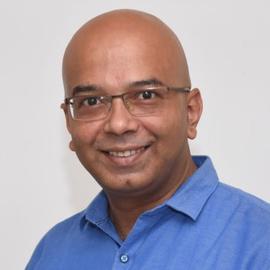
Rudra Banerjee
Assistant Professor, Computational Condensed Matter
Predicting how atomic-scale disorder and chemical complexity govern magnetic, catalytic, and quantum phenomena, from first principles.