Beyond Diamond: spin-qubit hosts at ISSMD-2026, IIT Ropar
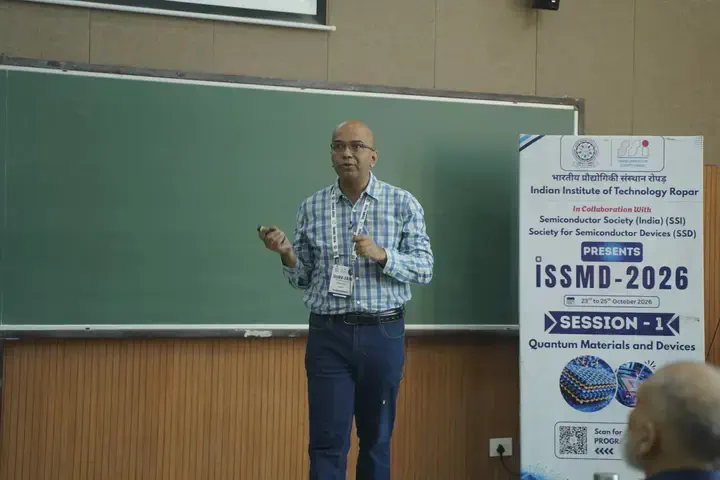 Session 1, Quantum Materials and Devices, ISSMD-2026, IIT Ropar.
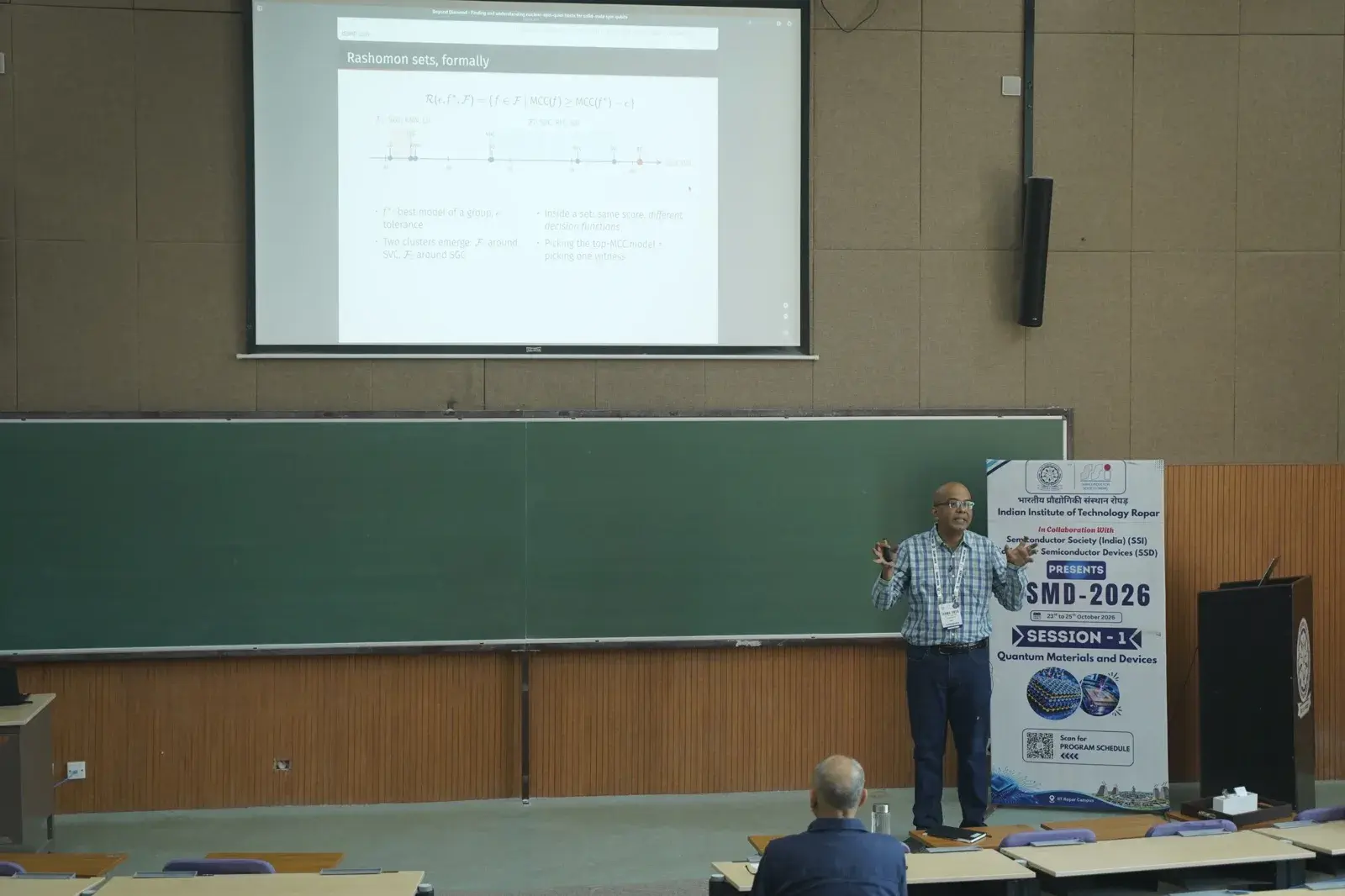
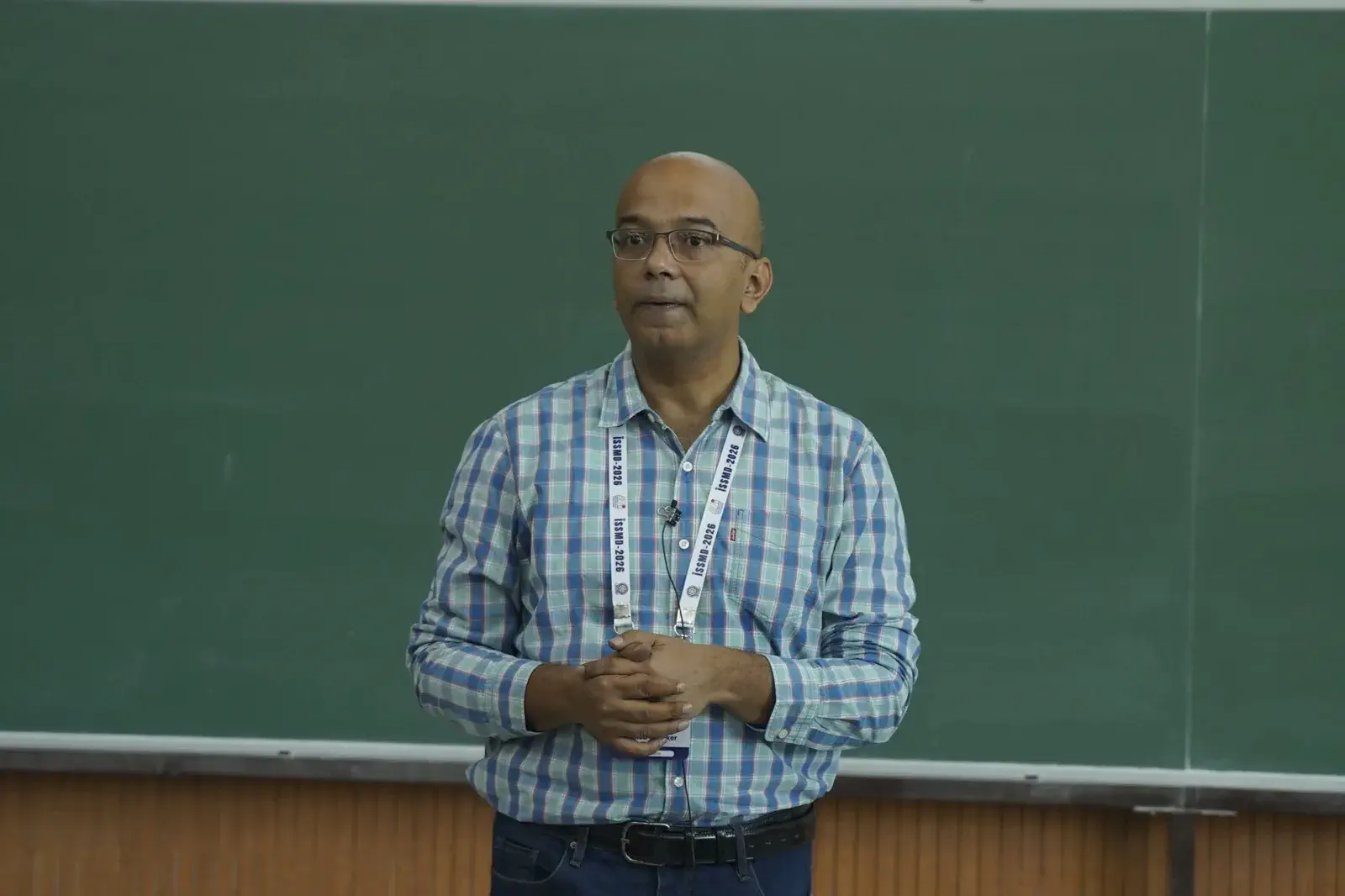
Dr. Banerjee gave an invited talk, Beyond Diamond: Finding and understanding nuclear-spin-quiet hosts for solid-state spin qubits, at ISSMD-2026, IIT Ropar, on 23–25 October 2026.
Where to look
Work by Md Mahshook A, published in Physical Review Materials.
The screen uses composition alone, so each compound costs milliseconds. Models with near-identical scores can explain the data in opposite ways (the Rashomon effect). We therefore keep a candidate only when independent model families agree.
Of about 45,000 stable compounds, 122 pass. The screen recovers diamond, SiC and ZnO. It also recovers MgO, CaO, CaS, WO₃ and SiO₂, which independent DFT studies had proposed, without being trained on them. About 40% of the candidates appear in no earlier screen. They fall into four families:
- layered chalcogenides (HfS₂, ZrS₂, SnS₂)
- alkaline-earth tellurides (CaTe, SrTe, BaTe)
- high-ε oxides (TiO₂, BaO, PbWO₄)
- ternaries (SrZrO₃, CaZrO₃)
What is there, in CeO₂
Work by Chithresh T M, in revision at Physical Review B.
Each oxygen vacancy in ceria leaves two localised Ce³⁺ polarons (4f¹, S = 1/2). Cerium has no magnetic isotope, so the only nuclear spins are ¹⁷O, at 0.038% abundance.
Each Ce³⁺ has seven oxygen neighbours, all at almost the same distance, but only one couples strongly. The occupied 4f orbital picks it, not distance. A point-dipole model predicts an isotropic coupling of exactly zero; DFT gives 2.02 MHz.
The result is a very quiet bath. At natural abundance, fewer than 1 centre in 2,000 has a strongly coupled ¹⁷O. For NV⁻ in diamond the figure is 1 in 30.
For EPR groups
This is testable. In ¹⁷O-enriched, reduced CeO₂ at X band, the strongly coupled first-shell ¹⁷O should give deep ESEEM modulation. In HYSCORE, its strong-coupling cross-peaks should resolve from a weak ridge at the ¹⁷O Larmor frequency (about 2 MHz). If your group can run this measurement, please get in touch.
Next, we will compute T₂ directly on this bath and apply the same workflow to TiO₂.
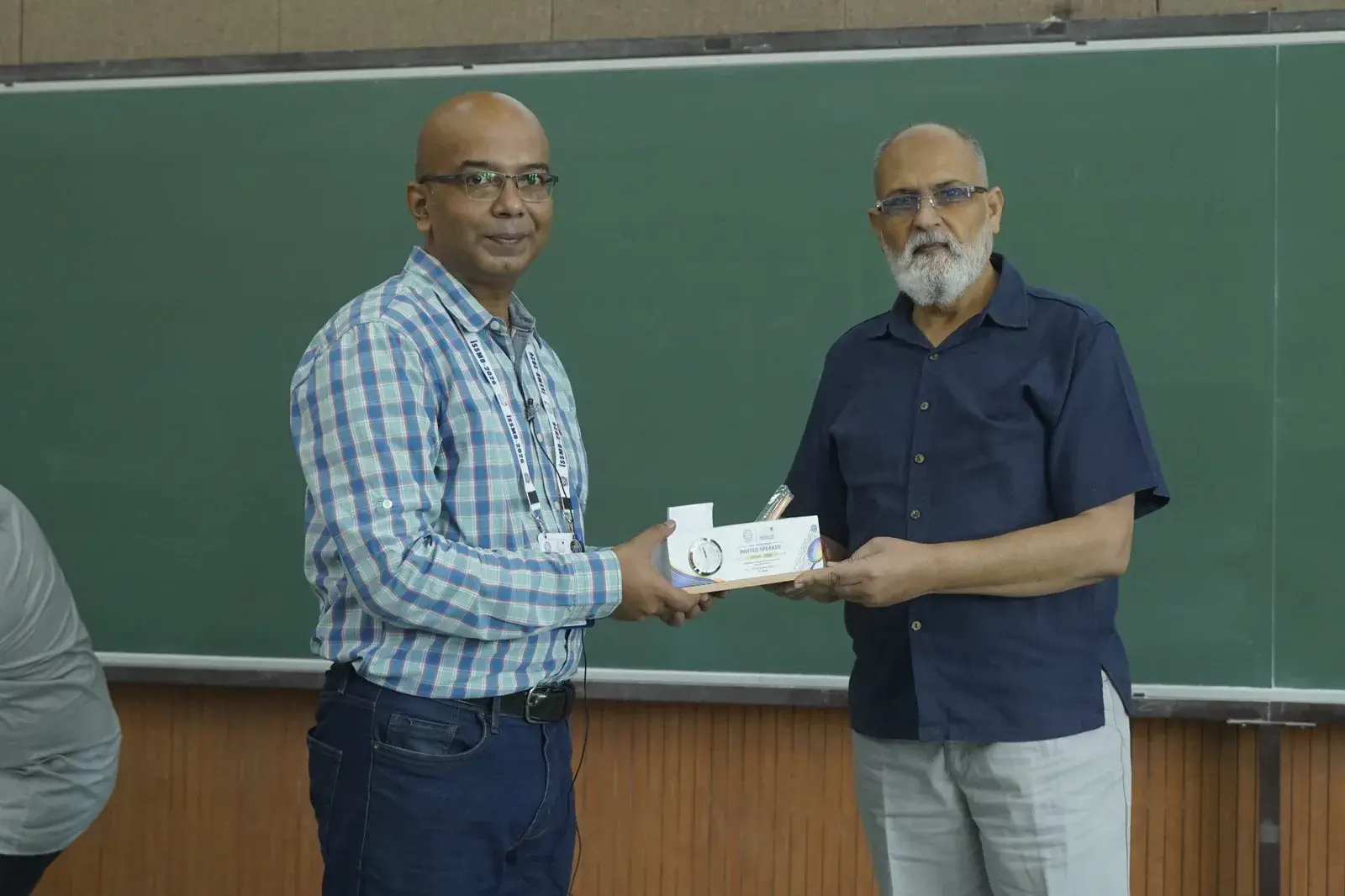
Thanks to the organisers at IIT Ropar for the invitation.