2025 | Looking Back
2025 was a year of quiet consolidation for me — not loud in numbers, but meaningful in direction.
We worked across electrocatalysis, 2D materials, and magnetic alloys, asking how chemistry, electronic structure, and magnetism can be engineered rather than merely reported. The problems were diverse, but the thread was common: using fundamental understanding to guide materials design.
The Research: One paper this year was particularly close to my heart, not because of metrics, but because it reaffirmed the value of careful, physics-driven ab initio work in a time increasingly dominated by speed.
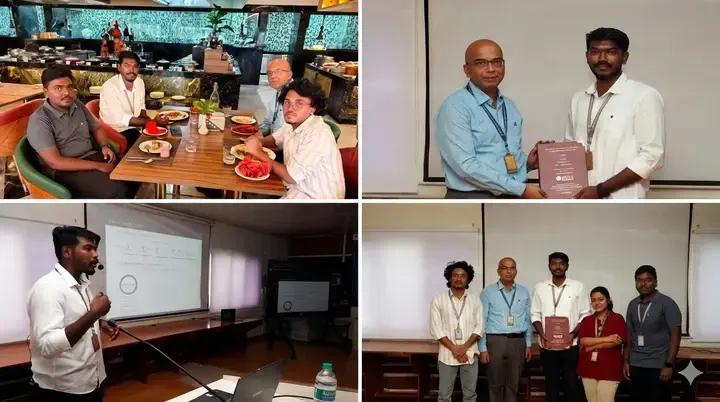
The Mentorship: On the mentoring side, this year was special. Karunakaran M completed his PhD, closing a long and demanding journey. Seeing a student grow into an independent researcher remains one of the most rewarding parts of academic life.
Perhaps the most important shift in 2025 has been internal. I have begun moving deliberately into a multidisciplinary regime, where condensed-matter physics meets materials chemistry, catalysis, and data-driven thinking. The boundaries are less comfortable — and that is precisely where the interesting questions lie.
Grateful to the collaborators and students who shared the journey this year. Looking ahead to slower science, deeper questions, and broader collaborations.